In the microscopic world of extremophiles, tardigrades—often called "water bears"—have long fascinated scientists with their uncanny ability to survive conditions that would obliterate most life forms. Recent breakthroughs have uncovered a remarkable mechanism behind their resilience: a vacuum-like "DNA origami shield" that protects their chromosomes during dehydration. This discovery not only rewrites our understanding of tardigrade biology but also opens tantalizing possibilities for biomedical and aerospace applications.
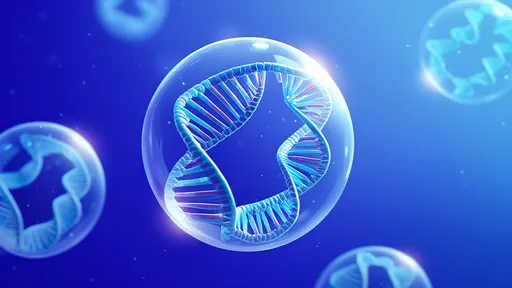
The key to their survival lies in how tardigrades manage the catastrophic stress of losing nearly all their body water. When desiccated, their chromatin undergoes an intricate folding process, collapsing into a dense, glass-like matrix that shields DNA from fragmentation. Researchers describe this as nature’s version of "cryogenic preservation at room temperature," where the organism essentially enters a state of suspended animation. What’s extraordinary is that this shield isn’t passive—it’s dynamically assembled by specialized proteins that act like molecular origami artists, folding DNA into fractal-like patterns resistant to radiation and mechanical stress.
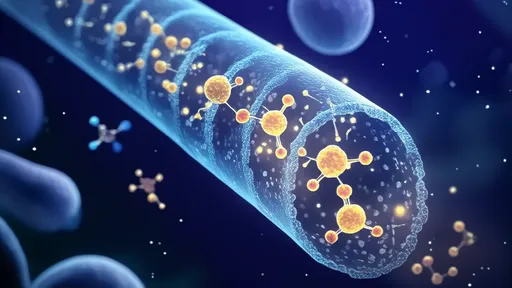
At the heart of this process is a unique family of tardigrade-specific proteins dubbed "Dsup" (Damage suppressor). These molecules bind to DNA like a protective scaffold, creating physical barriers against reactive oxygen species and cosmic rays. But the latest research reveals an even more sophisticated layer: the activation of ancient viral genes embedded in the tardigrade genome. These endogenous viral elements, once parasitic threats, now appear to coordinate the chromosome-folding ballet during dehydration. It’s a stunning example of evolutionary repurposing, where invaders become allies in the fight against extinction.
Scientists are now racing to decode the precise biophysical rules governing this DNA origami. High-resolution cryo-EM imaging shows chromosomes reorganizing into labyrinthine geometries that paradoxically become more stable as water disappears. The structures resemble fractalized armor, with hierarchical layers of defense down to the nanometer scale. This challenges traditional models of DNA damage, suggesting that extreme compaction—long thought to risk catastrophic tangling—can instead create near-indestructible configurations under stress.
The implications for human technology are profound. Synthetic biologists envision engineering similar protective systems for preserving vaccines or transplant organs. Aerospace agencies speculate about "tardigrade-inspired" suits that could shield astronauts from deep-space radiation. Yet perhaps the most revolutionary insight lies in rethinking life’s boundaries: if tardigrades can manipulate chromatin like programmable matter, what other organisms might harbor such transformative tricks? As one researcher mused, "We’re not just studying an animal—we’re decoding a survival algorithm written in DNA folds."
What remains hauntingly unclear is how tardigrades reverse the process upon rehydration. Like a phoenix resurrecting from ash, their chromosomes somehow disentangle without lethal errors—a feat that defies current biophysical models. Some hypothesize that residual quantum-level water molecules trapped in the DNA matrix act as a "rewinding guide," but this remains speculative. Solving this mystery could unlock breakthroughs in cryonics or even suspended animation for long-duration space travel.
As labs worldwide attempt to replicate tardigrade chromatin engineering in human cells, ethical questions emerge. Should we modify human DNA to withstand extreme environments? Could such enhancements alter what it means to be biologically human? The tardigrade’s gift is a double-edged sword—offering salvation from existential threats while challenging our very definition of life’s limits. One thing is certain: these microscopic marvels have handed science a new paradigm, written not in genetic letters alone, but in the cryptic folds between them.
By /Aug 18, 2025

By /Aug 18, 2025

By /Aug 18, 2025

By /Aug 18, 2025
By /Aug 18, 2025
By /Aug 18, 2025
By /Aug 18, 2025
By /Aug 18, 2025

By /Aug 18, 2025
By /Aug 18, 2025

By /Aug 18, 2025
By /Aug 18, 2025

By /Aug 18, 2025

By /Aug 18, 2025

By /Aug 18, 2025

By /Aug 18, 2025
By /Aug 18, 2025
By /Aug 18, 2025
By /Aug 18, 2025
By /Aug 18, 2025
