In the quiet depths of ancient forests, a silent conversation unfolds beneath our feet. Trees, long perceived as solitary sentinels of the woodland, are now understood to participate in an intricate underground network of mutual aid—a phenomenon that challenges our fundamental understanding of plant intelligence and ecological interdependence. This revelation comes not from the leaves or branches, but from an invisible web of fungal threads that transforms individual trees into a cooperative community.
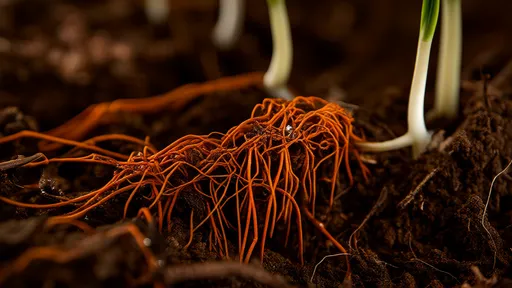
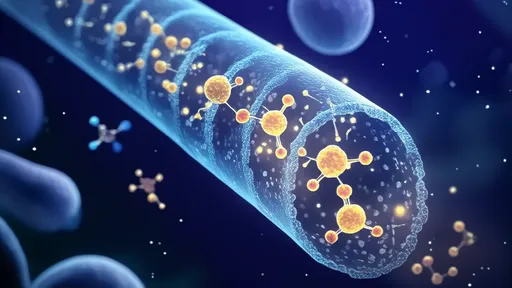
The discovery centers around mycorrhizal networks—vast subterranean systems where fungal filaments intertwine with tree roots to form symbiotic relationships. For decades, scientists recognized these networks as nutrient exchange systems, where trees trade sugars for minerals with their fungal partners. But groundbreaking research now reveals something far more extraordinary: these fungal pathways serve as conduits for trees to redistribute resources to distressed neighbors, even between different species. A wounded maple might receive carbon from a healthy oak; a shaded fir could draw nitrogen from a sunbathed pine. The forest, it seems, operates as a single living organism.
This arboreal solidarity manifests most dramatically when trees face injury or disease. Ecologists have documented cases where a tree attacked by insects will release defensive chemicals through its roots into the mycorrhizal network, effectively warning nearby trees to bolster their own defenses. More astonishing still, healthy trees have been observed diverting precious nutrients—sometimes up to 40% of their photosynthetic output—through fungal connections to support severely injured specimens that can no longer feed themselves. The nutrients appear to flow preferentially toward the most vulnerable individuals, following patterns that suggest an unrecognized form of arboreal altruism.
The mechanisms behind this phenomenon involve sophisticated biological signaling. When a tree's foliage is damaged, it releases volatile organic compounds that trigger changes in root exudates—the chemical cocktails secreted into the soil. These altered exudates stimulate the mycorrhizal fungi to modify their growth patterns, essentially rerouting nutrient flows toward the distressed tree. The fungi appear to act not merely as passive pipes, but as active participants in resource distribution, potentially benefiting from maintaining the overall health of their photosynthetic partners.
This underground economy operates on astonishing scales. A single mature tree might be connected to hundreds of others through thousands of fungal linkages, creating networks that can span entire forests. Scientists using isotopic tracing have mapped resource movements across surprisingly large distances, with nutrients sometimes traveling 30 meters or more from donor to recipient trees. The speed of transfer contradicts conventional models of passive diffusion, suggesting active transport mechanisms that remain poorly understood.
The implications of this discovery ripple through multiple disciplines. For ecologists, it demands a reevaluation of forest dynamics—competition between trees exists alongside profound cooperation. Conservation strategies may need to account for these networks when managing woodlands, as clear-cutting could disrupt vital connections beyond the visible damage. Even our philosophical understanding of intelligence undergoes challenge, as the forest demonstrates problem-solving capacities and memory (injured trees receive more aid during subsequent attacks) without anything resembling a nervous system.
Perhaps most remarkably, this phenomenon appears particularly developed in old-growth forests. Ancient mother trees—the largest, oldest specimens in the woodland—often serve as hubs in these networks, their extensive root systems supporting dozens of younger trees. When these elders are removed, studies show decreased survival rates among seedlings, suggesting that forests preserve institutional knowledge through these living libraries. The time scales involved dwarf human experience; some mycorrhizal networks may have persisted for thousands of years, quietly sustaining entire ecosystems across centuries.
As climate change stresses global forests, understanding these hidden support systems becomes urgent. Drought-stricken trees might survive through communal water sharing; pest-resistant species could bolster more vulnerable neighbors. Some researchers speculate that assisted migration—the human-mediated movement of species to new habitats—might require transplanting not just trees but their fungal partners to maintain these critical networks. What appears as independent organisms standing in solitude above ground reveals itself below as a tapestry of connection, reminding us that in nature, as in human society, survival often depends on the strength of invisible bonds.
The revelation of the "wood wide web," as some scientists poetically term it, transforms our perception of forests from collections of individuals to superorganisms with collective intelligence. These findings humble our technological arrogance—the most sophisticated internet pales against networks refined through 400 million years of coevolution. As we continue to unravel the mysteries of these subterranean conversations, we're forced to reconsider not just how forests function, but what it means to be an individual in a living world where everything is connected.
By /Aug 18, 2025
By /Aug 18, 2025

By /Aug 18, 2025

By /Aug 18, 2025
By /Aug 18, 2025
By /Aug 18, 2025

By /Aug 18, 2025

By /Aug 18, 2025

By /Aug 18, 2025
By /Aug 18, 2025

By /Aug 18, 2025
By /Aug 18, 2025
By /Aug 18, 2025

By /Aug 18, 2025

By /Aug 18, 2025
By /Aug 18, 2025
By /Aug 18, 2025
By /Aug 18, 2025
By /Aug 18, 2025
By /Aug 18, 2025
